Outside of work, and inside it
Games
Games and interactive media were my hobby, but I use them at work and more broadly to educate people on teamwork and complex concepts.
Why games
I enjoy experiencing stories, practicing skills and defeating challenges I don't get to experience in real life. Used well, interactive stories can help people empathise with other points of view and unlock collaboration, or enable people to try new things they wouldn't do outside of the freedom a game grants you. A game can compress consequences into minutes or hours, lets people fail safely, and makes the shape of a problem visible in a way a slide deck never does. I use them at work as well as on weekends — for threat modelling, for incident training, and for teaching people how decisions actually get made under pressure.
Games at work
Threat modelling workshop
An open-source, game-based threat modelling workshop I developed with colleagues at MYOB and have iterated on since. Participants roleplay threat actors against a real system, then prioritise, risk-assess and decide what to do about what they find. It's designed for rapid collaboration between engineering and security teams, and it's free to use — the materials, including the threat actor cards, are on GitHub.
Incident walkthrough training
Developed with the University of Melbourne: guided investment and then incident walkthrough game for students that puts people inside Medibank to prepare for their cyber security incident and then show them the consequences of their calls.
Current project: Expanding the game to better simulate the two things that make real cyber incidents hard: following the plan (if one exists) is hard, and coordinating across people under time pressure and stress. Other tabletop activities don't focus on these elements.
Megagaming
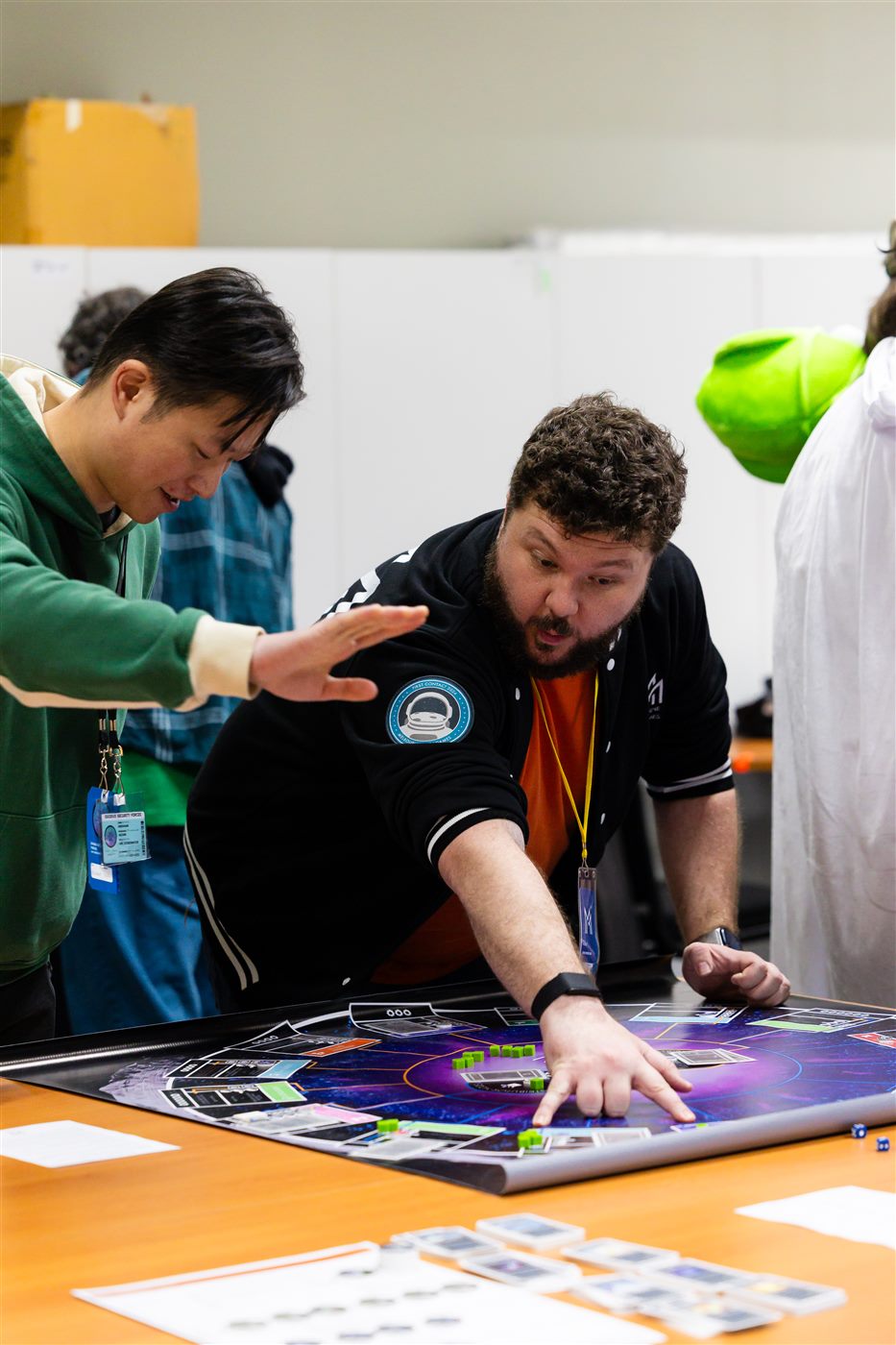
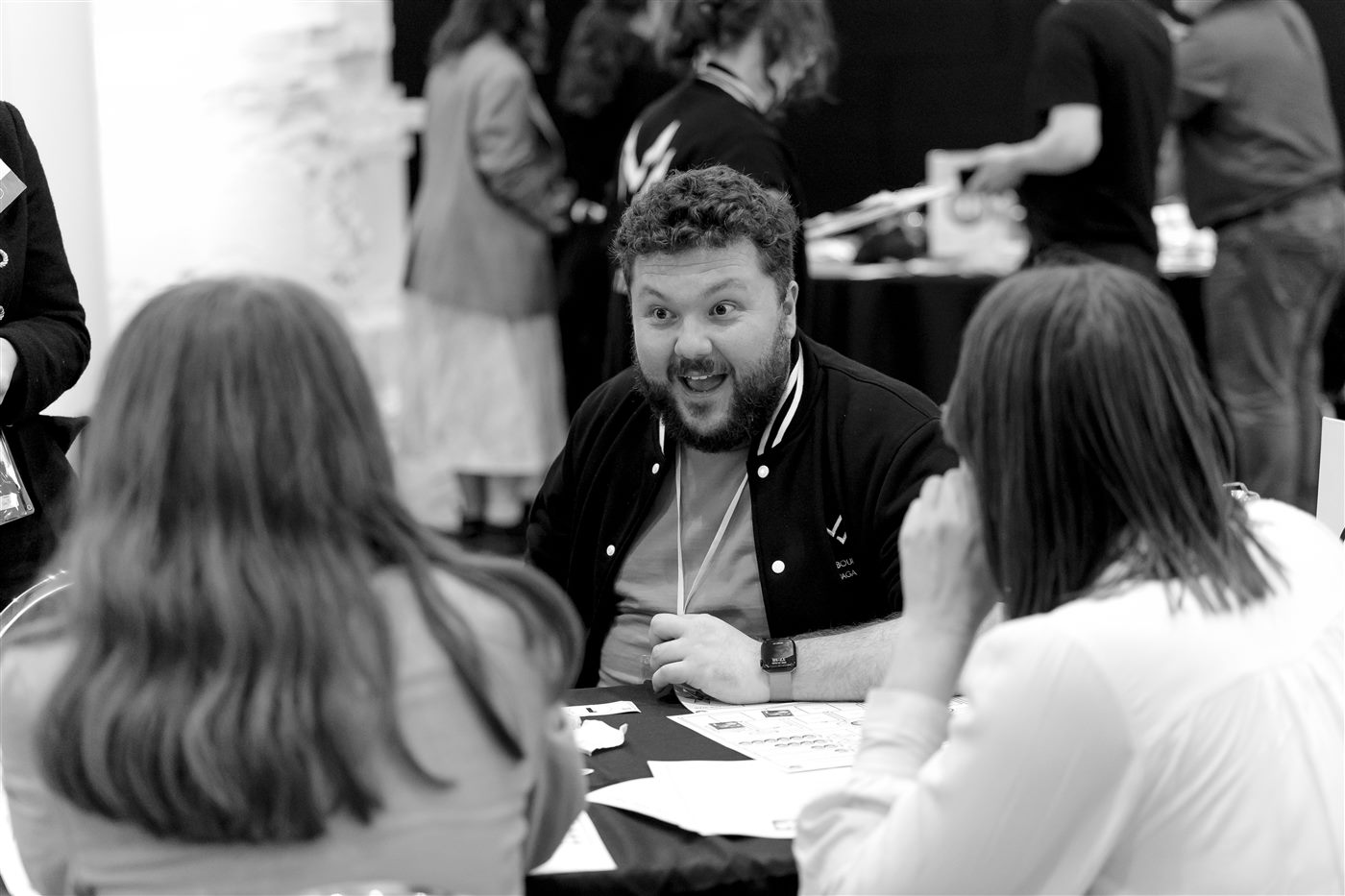
Megagames are one-off, large-scale live-action games — usually 50 to 200 players split across teams, playing out a scenario in real time over several hours. I facilitate, run logistics and lead games for Melbourne Megagames, and I've been on the board since 2025.
Scaling a volunteer organisation that runs events this size is the same problem I solve professionally: clear roles, decisions made fast under uncertainty, and a design that survives contact with a room full of unpredictable people. The work that makes it repeatable — logistics, facilitator development, and structure that doesn't depend on the same three people every time — is the part I care most about.
Megagame roles
| Role | Detail |
|---|---|
| Board Member | Melbourne Megagames, 2025 – present. Strategy, financial oversight and delivery. |
| Game Lead | Crisis in Elysium, It Belongs in a Museum, and This City Sucks. |
| Logistics | It Belongs in a Museum, This City Sucks, First Contact and So Say We All. |
| Facilitator | Every game run since 2023. |
Games since 2023
| Ran | Game | My role |
|---|---|---|
| Aug 2026 | Crisis in Elysium | Game Lead |
| May & Jul 2025 | It Belongs in a Museum | Game Lead, Logistics |
| Dec 2024 & Feb 2025 | This City Sucks | Game Lead, Logistics |
| Aug 2024 | First Contact | Facilitator, Logistics |
| 2023 – 24 | The Ark — SydneyFlew to Sydney to deliver the game to students in partnership with the Powerhouse Museum | Facilitator |
| Nov & Dec 2023 | So Say We All | Facilitator, Logistics |
| Jul 2023 | Fæ's Anatomy | Facilitator |
| Jan 2023 | Crisis in Elysium | Facilitator |
The full catalogue, including games that ran before 2023, is on the Melbourne Megagames site.
Tabletop
I dungeon master and play Dungeons & Dragons and other tabletop role-playing games regularly. I love seeing what a bunch of people who have the right scaffolding will do.
I'm an avid listener of Not Another D&D Podcast, Critical Role and Dimension 20.
Video games
I love both plot-driven narrative games (Mass Effect, Dragon Age, Jedi: Fallen Order and Survivor, and 007 First Light) and system-driven games (Dyson Sphere Program, Civilization and Transport Tycoon).
It's not a coincidence that those are the same two things I like about work: stories about meaning, and a system that actually holds together.